
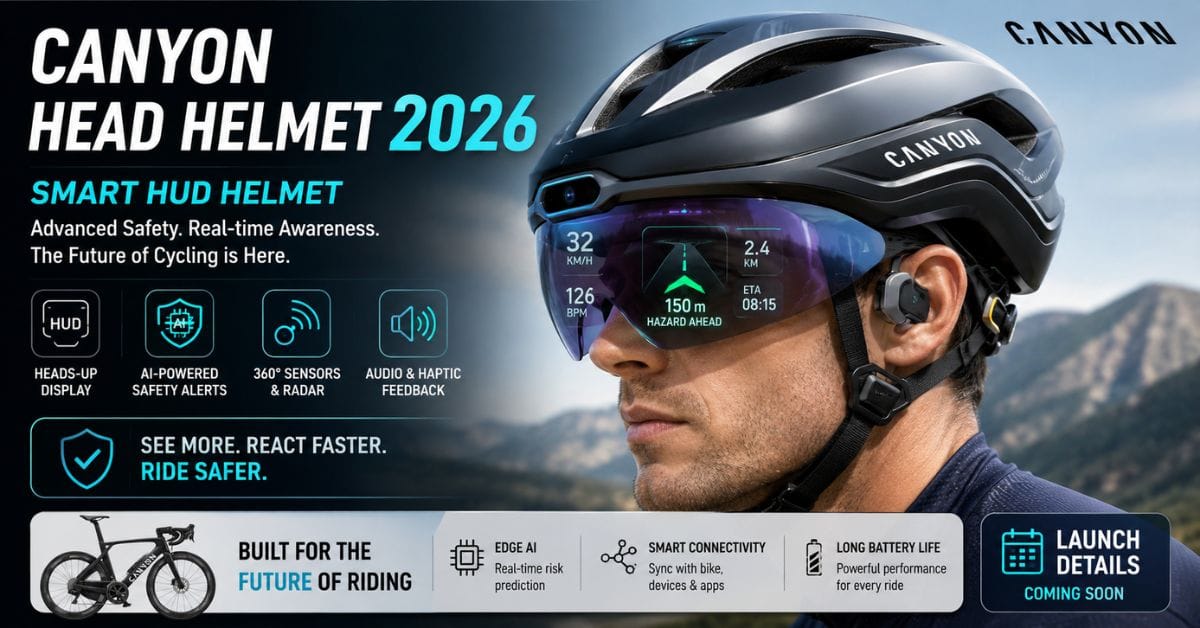
Cycling technology is moving fast, and one of the most talked-about innovations in 2026 is the new Canyon smart helmet concept. Known as the Canyon Head Helmet 2026 Stingr Smart Helmet, the futuristic helmet combines a heads-up display (HUD), AI-powered safety alerts, and connected riding technology. While it is currently a prototype, it offers a glimpse into what the future of cycling safety may look like.
In this article, we explain what the Canyon Head Helmet 2026 is, its key features, how it works, why it matters for riders, and whether it could eventually reach markets such as India.
What Is the Canyon Head Helmet 2026 ?
The Canyon Head Helmet 2026 refers to Canyon’s latest smart helmet concept called the Stingr Smart Helmet. The helmet was unveiled alongside the company’s futuristic Predict bike safety system at Eurobike 2026 in Germany. According to Canyon, the helmet is designed to improve rider awareness by displaying safety and performance information directly inside the rider’s field of view.
Unlike traditional cycling helmets that focus mainly on impact protection, the Stingr Smart Helmet aims to help riders identify potential hazards before they become dangerous situations.
Key Features of the Canyon Smart Helmet
Heads-Up Display (HUD)
The biggest highlight is the integrated heads-up display built into the helmet’s retractable visor. Riders can see important information without looking down at a bike computer or smartphone.
The display can potentially show:
- Road hazard warnings
- Traffic-related alerts
- Group ride information
- Riding performance data
- Navigation and safety notifications
This technology is designed to keep a rider’s eyes focused on the road while still receiving important information.
AI-Powered Safety System
The helmet works with Canyon’s Predict safety platform, which uses sensors, cameras, radar technology, and edge AI to analyze the environment around the cyclist. The system aims to predict potential risks before the rider notices them.
For example, the system may detect:
- Sudden obstacles
- Dangerous road surfaces
- Nearby vehicles
- Group riding changes
- Cornering risks
Warnings can then be delivered through visual, audio, or haptic alerts.
Audio and Haptic Feedback
In addition to the display, the helmet can communicate information through sound and vibration-based alerts. This creates multiple layers of safety communication without distracting the rider.
How Does It Compare to Traditional Helmets?
Most helmets currently available in India focus on impact protection standards such as ISI certification for motorcycle helmets or advanced rotational-impact technologies in premium cycling helmets. The Canyon concept takes a different approach by combining protection with real-time information and predictive safety systems.
Instead of reacting after an accident occurs, the goal is to help riders avoid accidents in the first place.
Background: Canyon’s Recent Helmet Innovations
The smart helmet project is not Canyon’s first move into helmet technology.
In recent years, the company introduced the Stingr and Disruptr performance helmets featuring the HighBar retention system, which was designed to improve fit, aerodynamics, cooling, and comfort. Canyon also launched the Deflectr mountain-bike helmet featuring the new Release Layer System (RLS), aimed at reducing rotational forces during crashes.
The 2026 Stingr Smart Helmet builds on those innovations by adding connected technology and advanced rider assistance features.
Why This Matters for Cyclists
Road cycling continues to grow worldwide, but safety remains a major concern. Riders often face risks from traffic, poor road conditions, and limited visibility.
The Canyon smart helmet addresses these concerns through:
- Earlier hazard detection
- Better rider awareness
- Reduced need to look at external screens
- Improved communication during group rides
- Enhanced situational awareness
If the technology proves reliable, it could represent a major shift in cycling safety equipment over the next few years.
Potential Impact in India
India’s cycling market is expanding, especially in urban fitness and premium cycling segments. Smart helmets could attract enthusiasts looking for advanced safety features.
However, there are several challenges before widespread adoption:
- High expected pricing
- Need for local support and service
- Battery and connectivity requirements
- Adaptation to Indian road conditions
At present, Canyon has not announced an India launch or commercial release timeline for the Stingr Smart Helmet prototype.
Is the Canyon Head Helmet 2026 Available for Purchase?
As of June 2026, the Stingr Smart Helmet remains a concept prototype shown alongside Canyon’s Predict safety system. The company has presented the technology as a vision for the future rather than a confirmed production product. There is currently no official retail availability or confirmed commercial launch date.
What Happens Next?
Industry experts will closely watch how Canyon develops the Predict platform and smart helmet technology. If testing is successful, future versions could include:
Read More : New Maruti Brezza Facelift 2026
- Commercial HUD integration
- Advanced navigation support
- Emergency crash detection
- Connected vehicle alerts
- AI-assisted riding recommendations
The coming years will determine whether smart helmets become a niche premium product or a mainstream cycling safety solution.
FAQs (Canyon Head Helmet 2026)
What is the Canyon Head Helmet 2026?
It is Canyon’s Stingr Smart Helmet prototype featuring a heads-up display, AI-powered safety alerts, and connected cycling technology.
Does the helmet have a built-in display?
Yes. The concept includes a heads-up display integrated into a retractable visor that can show safety and performance information.
Is the Canyon smart helmet available in India?
No official India launch or availability has been announced yet.
How does the helmet improve safety?
It uses connected sensors, AI analysis, and rider alerts to identify hazards and provide warnings before dangerous situations develop.
Is this a motorcycle helmet?
No. The Stingr Smart Helmet is designed primarily for cycling and road-bike applications.
