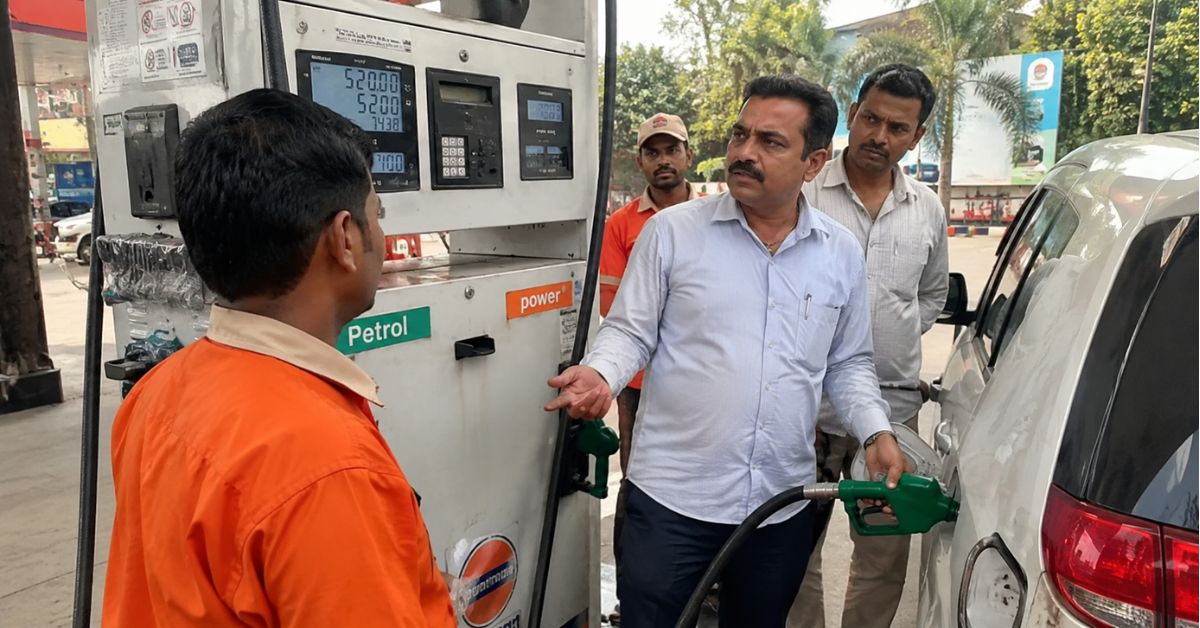
A 40 Liter Tank in 52 Liter Petrol Fill case from Kanpur has gone viral after a car owner claimed that his vehicle was billed for about 52 litres of petrol, even though the car’s fuel tank capacity was said to be 45 litres. The search phrase “40 liter tank in 52 liter petrol fill” is trending because many social media posts and headlines are using this wording, but current reports mention a 45-litre tank in the main case.
The matter has raised a common question for vehicle owners in India: can a fuel tank really take more petrol than the capacity written in the car manual, or is this a sign of petrol pump fraud? The case has now taken a new twist after inspection reports said no technical fault was found in the dispensing machine, while the complainant and vehicle-related details still raise doubts.
Kanpur Petrol Pump Case Explained
The incident was reported from Harsh Nagar in Kanpur, Uttar Pradesh. The car owner, identified in reports as Charan Singh, claimed that he had taken a newly purchased car to a petrol pump for a full tank. According to the claim, the car’s fuel tank capacity was 45 litres.
The owner said the car already had some petrol before refuelling. Still, after the refill, he was given a bill showing around 52 litres of petrol. This made the case go viral because many people felt that a 45-litre tank should not be able to take 52 litres, especially if some fuel was already present inside.
The video of the argument and the claim spread quickly on social media. After this, district officials and concerned departments started looking into the complaint.
The New Twist: Inspection Finds No Machine Fault
The latest twist in the case is that officials reportedly inspected the petrol pump and did not find any technical fault in the machine. According to reports, the District Supply Department team reached the spot and checked the dispensing unit.
Officials said the machine was found normal during inspection. They also said that in some vehicles, fuel tanks can take more fuel than the declared capacity because of reserve space and extra space in the fuel system.
However, this explanation has not fully ended the debate. The main question remains: if the car was said to have a 45-litre tank and already had some petrol, how did the bill show about 52 litres?
Why the Case Is Still Not Clear
The case is not simple because there are two different sides.
On one side, officials said the petrol pump machine did not show any technical fault during checking. They also referred to the idea that a car’s actual fuel-holding space may be more than the figure mentioned as tank capacity.
On the other side, the complainant claimed that such a high quantity was not possible in his vehicle. Reports also said a vehicle-related representative or technician believed that 52 litres or more would not normally fit in that model. This has kept the issue open in public discussion.
Another important point is the timing of the inspection. The complainant has raised questions over why the inspection was not done immediately. According to reports, the inspection happened after a delay, and this delay has created more doubt among people following the case.
How Was the Petrol Filled?
As per the car owner’s claim, the petrol was not filled in one continuous process. He said the pump first filled around 40 to 41 litres. After that, more than 11 litres was added.
This part of the story became important because the owner questioned why the process was split into two parts. The pump staff reportedly gave an explanation related to filling larger quantities, but the owner was not satisfied.
For many readers, this is the most confusing part. If a car’s tank is close to full after around 40 litres, the question is how another 11 litres could be added later. This is why the case is being widely discussed online.
Can a Car Fuel Tank Hold More Than Its Written Capacity?
Yes, in some cases a car fuel tank may take more fuel than the declared capacity. The capacity written in a vehicle manual is often a safe filling capacity or an approximate usable capacity. The actual physical space in the fuel system can be slightly higher.
There may be some extra space in the fuel tank, filler neck, pipes, and expansion area. This extra space is kept for safety reasons because fuel expands with heat. If a tank is filled to the brim, fuel may not get enough space to expand.
But this does not mean every large difference is automatically normal. A small extra amount may be possible in some vehicles. A very large difference should be checked properly, especially if the vehicle already had fuel before refilling.
In this Kanpur case, the dispute is mainly about the size of the difference. The car owner believes the difference is too high. Officials have said the dispensing machine was found normal. This is why the final conclusion depends on proper technical verification, vehicle details, and the official report.
Petrol Pump Case Raises Important Consumer Questions
This case matters because petrol and diesel are everyday expenses for millions of Indian vehicle owners. Even a small error in fuel delivery can affect customers because fuel prices are high and most people trust the meter at the petrol pump.
The issue also highlights a bigger consumer concern: many people do not know the difference between declared fuel tank capacity and actual fillable space. Because of this, arguments often happen at petrol pumps when the meter shows more fuel than expected.
At the same time, petrol pump operators also have a duty to maintain trust. If a customer raises a serious complaint, the inspection should be quick, transparent, and properly recorded. Delays or unclear explanations can create public doubt, even if the machine is later found correct.
Role of Legal Metrology in Petrol Pump Cases
In India, petrol pump machines come under the measurement and verification system. Legal Metrology departments check whether fuel dispensing units are giving the correct quantity.
During inspection, officials use standard measures to test whether the quantity shown by the machine matches the fuel actually delivered. If a machine is found giving less fuel or has broken seals, action can be taken under the law.
This is why consumers should not only argue at the petrol pump. They should collect proof and file a proper complaint. A proper complaint gives authorities a clear basis to check the machine and the outlet.
What Should Customers Do at a Petrol Pump?
Customers should stay alert, but they should also avoid panic. The first step is to check whether the meter starts from zero. The customer should also keep the bill after refuelling.
If the quantity shown on the bill looks impossible, the customer should note the petrol pump name, address, date, time, nozzle number if visible, and vehicle details. A video or photo can help, but it should be taken safely without creating a fight.
The customer can ask for a standard measure test at the petrol pump. If the staff refuses or the customer is not satisfied, the complaint can be given to the oil company, Legal Metrology Department, district supply officials, or MoPNG e-Seva.
The Road Ahead for the Kanpur Petrol Pump Case
At the time of writing, public reports say the petrol pump machine was checked and no technical fault was found. But the issue has not fully ended because the complainant has raised questions about the delay in inspection and the vehicle capacity details.
The next important step will be the final official conclusion. If authorities find that the machine was correct and the vehicle could hold extra fuel, the case may be treated as a misunderstanding over tank capacity. If later evidence shows wrong billing, machine tampering, or short delivery, action can be taken against the petrol pump.
For now, the safest conclusion is that the case is still a matter of public debate. No one should declare fraud without final proof, but the consumer’s questions also deserve a clear and transparent answer.
Impact in India: A Viral Case With a Bigger Lesson
The Kanpur petrol pump case has become more than one local complaint. It has become a lesson for vehicle owners across India.
Many people are now checking their car manuals, fuel bills, and petrol pump meters more carefully. The case has also brought attention to the need for better awareness about fuel tank capacity. Car makers may need to explain safe filling capacity and actual tank volume more clearly to customers.
Petrol pumps also need to handle such complaints with patience and transparency. In viral cases, a delayed or unclear response can damage public trust, even before the final report comes out.
Official Updates So Far
The main official update reported so far is that the petrol pump machine was inspected and no technical fault was found during the checking. Officials also said that vehicle tanks may have some extra capacity beyond the declared figure.
However, the complainant has questioned the inspection timing and the explanation. Reports also mention that vehicle-side technical opinion has added another layer to the debate.
This means the case should be followed for any final written report or further action from the district administration, the oil company, or the Legal Metrology Department.
Closing Summary
The “40 liter tank in 52 liter petrol fill” trend is linked to a Kanpur petrol pump case where the main reported dispute is about 52 litres of petrol being billed for a car said to have a 45-litre tank. The new twist is that inspection reportedly found the machine normal, but the complainant’s doubts and vehicle-capacity questions remain.
Read More : Hero Splendor Xtec 2.0 2026
For Indian consumers, the case is a reminder to check the meter, keep the bill, understand fuel tank capacity, and file complaints through the proper channels when something looks wrong. Until the final official conclusion is clear, the matter should be treated as a serious consumer complaint, not as a confirmed fraud claim.
FAQs (40 Liter Tank in 52 Liter Petrol Fill)
Why is “40 liter tank in 52 liter petrol fill” trending?
It is trending because of a viral petrol pump case from Kanpur. The common search phrase says 40 litres, but current reports describe the main case as a 45-litre car tank being billed for about 52 litres of petrol.
Did officials find fraud at the petrol pump?
Current reports say officials inspected the dispensing machine and did not find a technical fault. However, the complainant has raised questions about the inspection delay and the vehicle’s actual fuel capacity.
Can a car tank take more fuel than the manual says?
Yes, some vehicles may take more fuel than the declared capacity because of extra space in the tank, filler neck, and fuel system. But a large difference should be checked properly.
What should I do if a petrol pump gives a suspicious bill?
Keep the bill, note the pump details, check whether the meter started from zero, and ask for a standard measure test. If needed, file a complaint with the oil company, Legal Metrology Department, district officials, or MoPNG e-Seva.
Is it safe to fill a fuel tank to the brim?
It is better not to overfill the fuel tank. Fuel needs some space for expansion. Filling beyond the safe level may create leakage or other safety concerns in some cases.